
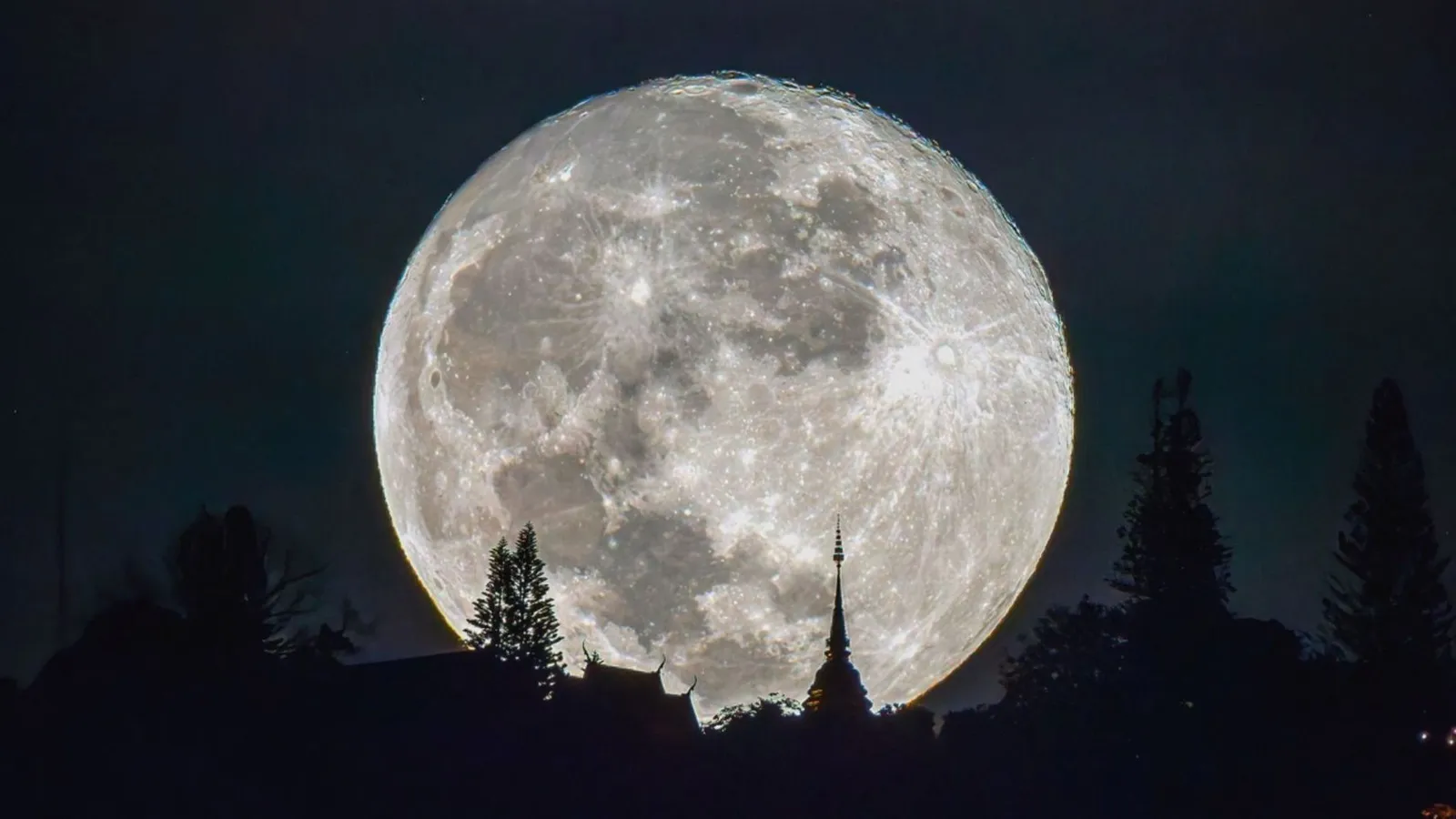
Stargazers should prepare their telescopes and cameras for a breathtaking celestial event as the Cold Moon arrives in December 2026. Reaching peak illumination at 8:28 p.m. EST on December 23, this particular full moon earns its chilly nickname from the freezing temperatures typical of the Northern Hemisphere during this season. However, there is something even more special about this occurrence; the moon will be passing through perigee, its closest approach to Earth in its elliptical orbit. This creates a supermoon effect, meaning the lunar disk will appear up to 30 percent brighter and 14 percent larger than usual, marking it as the closest supermoon of the entire year.
For those hoping to catch the show, the best viewing begins as the moon rises over the eastern horizon at sunset on December 23. Observers might notice a striking golden or orange hue during these early moments, a result of moonlight traveling through more of Earth’s atmosphere and scattering shorter blue wavelengths. While some of this perceived size is due to the actual distance of perigee, much of it comes from the moon illusion, a psychological trick that makes the orb seem massive when viewed alongside terrestrial landmarks like buildings or trees.
Beyond its scientific appeal, the Cold Moon carries deep cultural significance across various traditions. Known as the Long Night Moon by the Mohican tribe due to its timing near the winter solstice, it has also been called the Moon Before Yule by old English cultures and the Oak Moon by European Celts. The event also aligns with several major celebrations, coinciding with both the Hindu festival of Datta Jayanti and falling just two days before Christmas Day.
The brilliance of the supermoon won’t overshadow other wonders in the night sky. Enthusiasts can look for a majestic arrangement known as the Winter Hexagon, connecting bright stars such as Sirius and Rigel. Those looking toward different corners of the horizon may also spot Jupiter and Mars glowing in the east before midnight, while Saturn lingers in the west and Venus emerges as a radiant morning star just before dawn. Whether using a professional telephoto lens or simply glancing upward from a backyard, this convergence offers one of 2026’s most vivid opportunities to connect with the cosmos.