
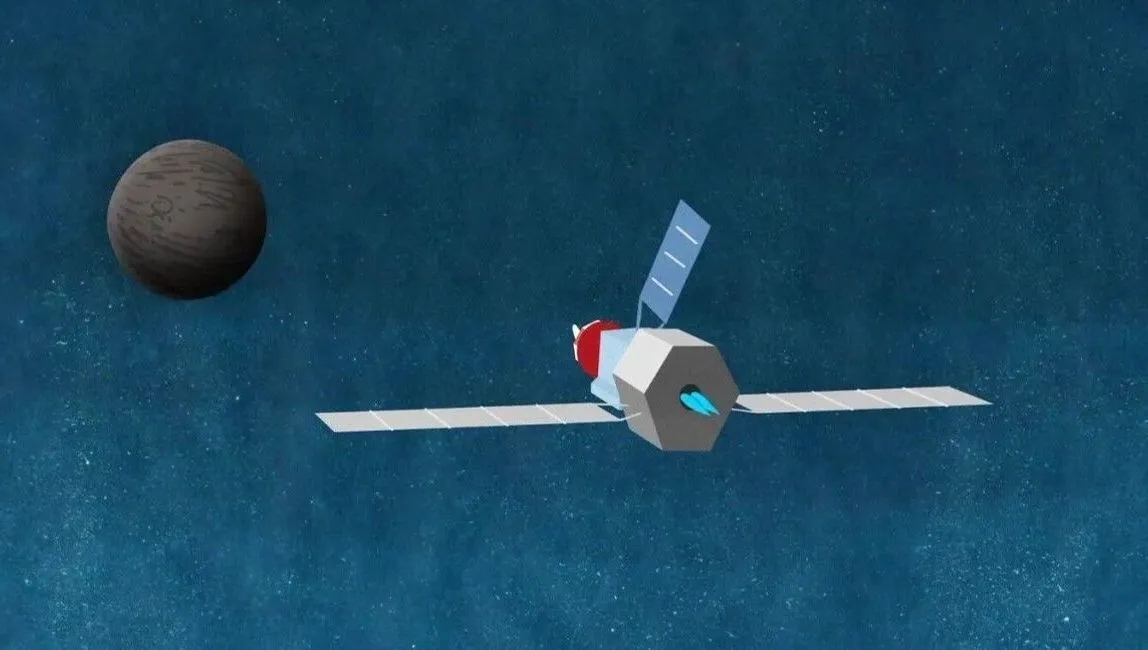
The long road to Mercury has always been a daunting challenge for engineers, but humanity’s third venture to the scorched planet has hit a snag just as it crossed the finish line. BepiColombo, a collaborative masterpiece between the European Space Agency and JAXA, successfully entered orbit this past weekend after an odyssey involving multiple gravity assists from Earth and Venus. However, the celebration was dampened when officials revealed that a sudden software glitch caused the final thruster burn to end prematurely.
While controllers confirm that the spacecraft remains safe, they are currently scrambling to determine why the system cut short such a critical maneuver. This technical hiccup comes after a year of instability for the mission; earlier in 2024, underperforming thrusters forced teams to rewrite the flight path entirely and shift the arrival date forward. It seems that software instabilities have followed BepiColombo into deep space, echoing similar struggles recently faced by NASA missions at Mars and various tech systems back on Earth.
Despite the uncertainty surrounding its current orbital state, BepiColombo carries immense scientific weight. Once fully operational, it will deploy two specialized probes designed to survive some of the most hostile conditions in the galaxy. The European planetary orbiter is wrapped in nearly 100 kilograms of titanium and ceramic shielding to block radiating heat from the surface, while Japan’s magnetospheric orbiter must withstand sunlight ten times more intense than what we experience on Earth. Together, they aim to map Mercury’s interior and provide fresh tests for Einstein’s theory of General Relativity.
The stakes are particularly high given recent setbacks for other deep-space ventures. Just last week, JAXA admitted that its veteran Hayabusa2 probe had deteriorated too much to land on its target asteroid, forcing a change in plans toward a simple fly-by mission instead. With full science operations not expected until April 2027, technicians now face a tense waiting period as they analyze telemetry data to ensure these expensive instruments survived their bumpy introduction to Mercury’s gravitational pull.