
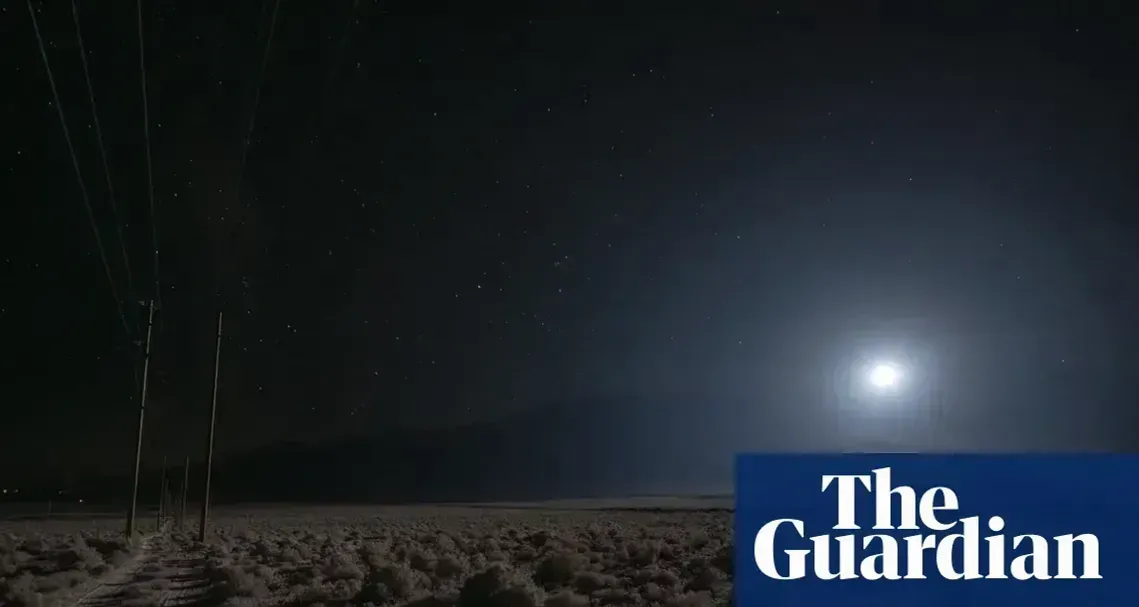
Residents in a quiet corner of rural California were left bewildered recently when blinding pillars of light suddenly illuminated the desert landscape near Lone Pine. While locals initially feared something otherworldly, the spectacle was actually a calculated demonstration by Reflect Orbital, a US startup with the ambitious goal of erasing nighttime. The company envisions launching 50,000 satellites equipped with giant mirrors to bounce sunlight back to Earth, effectively allowing users to summon daylight on demand through a smartphone app.
During the recent trial near Mount Whitney, the company used large mobile lights to simulate the effect of their proposed orbital mirrors. Reflect Orbital argues that this technology could be a lifesaver for search and rescue teams operating in total darkness, while also offering practical applications like powering solar panels at midnight or aiding agricultural growth. Having already received preliminary approval from the Federal Communications Commission for an initial satellite launch next year, the firm believes its system will reduce reliance on fossil fuels by extending solar energy production into the night.
However, the prospect of artificial sunshine has ignited a firestorm among astronomers and environmentalists. Critics argue that dismantling the boundary between day and night is an ecological disaster waiting to happen. Legal experts from groups like Earthjustice have slammed the project as idiotic, noting that nearly every living organism on Earth has evolved around a strict circadian rhythm. There are grave concerns that constant light would disrupt animal mating and migration patterns, ruin human sleep cycles, and permanently blind us to the stars in our own night sky.
Beyond biological concerns, climate scientists have warned that adding more solar radiation to the planet is dangerously counterintuitive during a global heating crisis. Some researchers point out that while others suggest using space mirrors to cool the Earth by reflecting heat away, Reflect Orbital wants to do exactly the opposite. Despite these warnings and calls for the FCC to revoke its approval, Reflect Orbital maintains it will coordinate with regulators to avoid sensitive wildlife preserves and astronomical observatories, insisting that their vision for a lit-up world is both safe and necessary.