
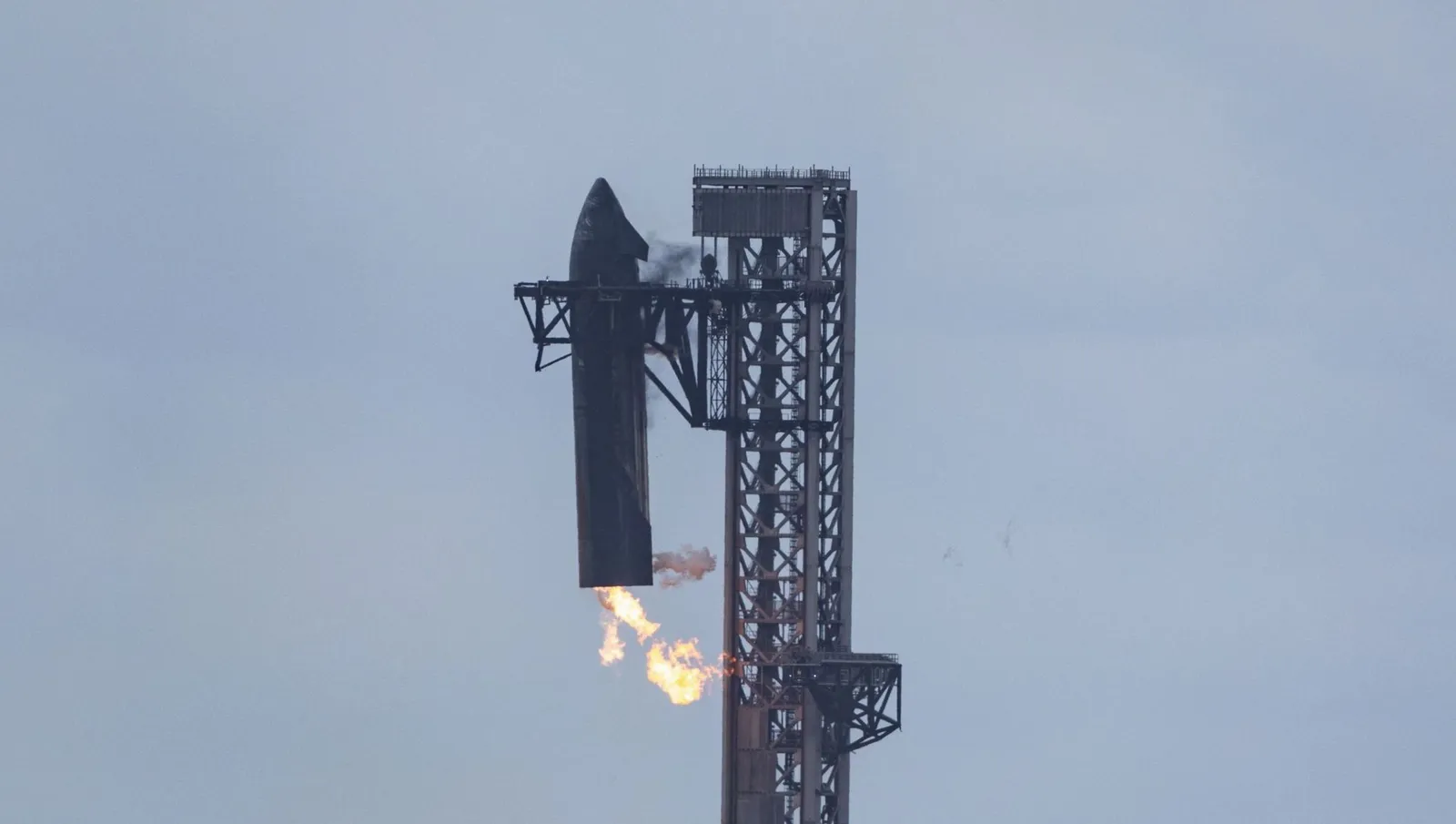
The landscape of aerospace engineering shifted on Saturday when SpaceX successfully caught its Starship upper stage using the massive mechanical arms of its launch tower in South Texas. While the mission began with mixed results on Friday, as the Super Heavy booster was forced to divert to a splashdown in the Gulf of Mexico due to a low-fuel alarm, the subsequent recovery of the Ship upper stage marked a historic achievement. This maneuver is significantly more complex than catching a booster because the ship travels faster and reaches much higher altitudes, making its precision return a high-stakes gamble that ultimately paid off.
According to SpaceX officials, this successful catch represents the holy grail of spaceflight, signaling a transition toward an era where rockets can be plucked from the air and prepared for takeoff almost immediately. The long-term vision shared by Elon Musk is staggering, with goals of reaching ten thousand launches per year by 2030. Such a relentless pace is necessary to support ambitious projects like the Starlink V3 broadband network and the Starmind AI constellation, which could eventually put over a million spacecraft into orbit. However, achieving this requires moving beyond single catches to a seamless cycle of rapid inspection and reflight.
Despite the celebration, significant technical hurdles remain before Starship becomes a routine interplanetary ferry. Beyond perfecting reuse, SpaceX must prove it can refuel ships in Earth’s orbit via specialized tankers—a cryogenic challenge involving liquid oxygen and methane that has yet to be demonstrated. These capabilities are critical for NASA’s Artemis program, which relies on Starship to land astronauts near the lunar south pole by 2028. With competitors like Blue Origin waiting in the wings, SpaceX is racing against time to finalize crew cabins and orbital fueling systems.
As the company moves forward from Flight 15, the focus shifts from whether these machines can survive their descent to how quickly they can be turned around for another journey. While capturing a falling skyscraper of steel provides an incredible visual victory, the true test will be transforming that spectacle into a reliable industrial pipeline. For now, space enthusiasts are watching closely as SpaceX attempts to turn what once seemed like science fiction into a daily occurrence at Starbase.