
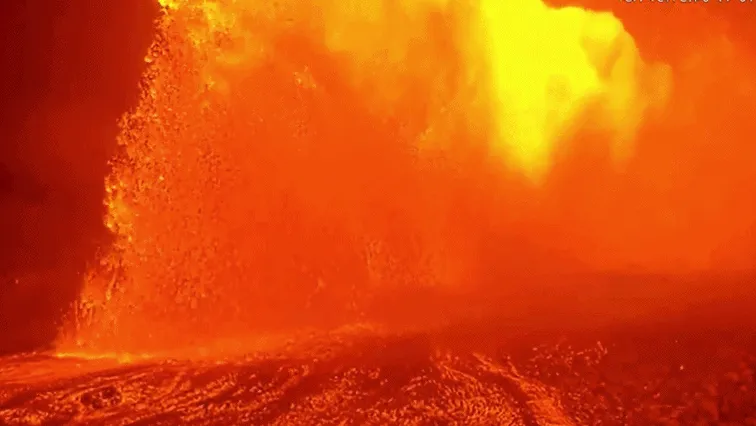
Hawaii’s Kilauea volcano roared back to life early Saturday morning, marking its 55th eruptive episode since December 2024. The eruption began shortly after 3 a.m. local time, ending an unusually quiet period that left both residents and scientists waiting. While the volcano is known as one of the most active on Earth, this particular break lasted two months, far exceeding the typical multi week pauses observed over the last couple of years.
The spectacle at the summit has been dramatic, with United States Geological Survey observers reporting lava fountains reaching heights of 250 feet. These towering plumes of molten rock are currently feeding a broad sheet of lava directly into the Halema’uma’u crater. Due to the intensity of the event and preceding seismic unrest, officials have temporarily closed portions of the national park, including the Halema’uma’u and Byron Ledge trails, to ensure public safety.
Geologists noted that predicting this specific start date proved difficult because recent activity shifted away from Kilauea’s usual patterns. In late September and early October, a series of earthquakes and a shallow magma intrusion created new cracks across the caldera floor, disrupting the regular cycle of pressure buildup and release that previously governed these episodes. Scientists believe these subsurface shifts likely contributed to the extended silence before Saturday’s breakout.
Visitors and locals are being cautioned about the environmental hazards accompanying the flow. Volcanic gases can pose significant risks to those with respiratory conditions, while shards of volcanic glass known as Pele’s hair may drift downwind, potentially irritating the skin and eyes. As the situation evolves, authorities continue to monitor the summit closely for further changes in stability or output.