
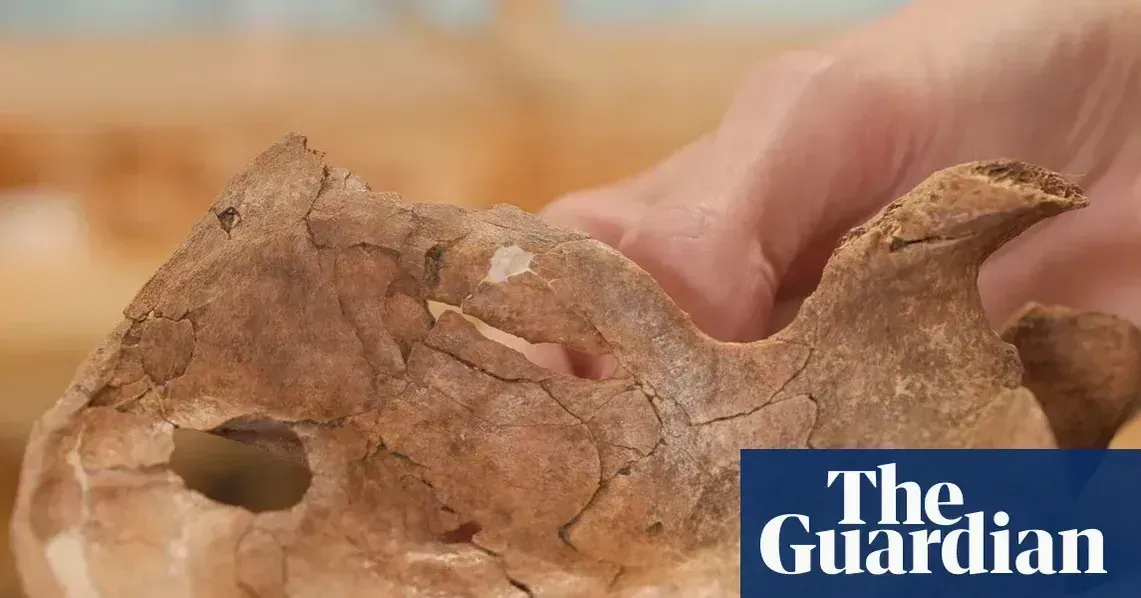
Deep within the Shanidar cave of Iraqi Kurdistan, archaeologists have uncovered what may be the earliest evidence of a human ancestor being killed by a weapon. While excavating beneath eight meters of rock and sediment, researchers discovered the partial remains of a middle aged Neanderthal whose left shoulder blade bears a distinct, smooth round hole. This small puncture, measuring roughly 1.5 centimeters wide, shows clear signs of impact trauma that experts believe was caused by a wooden spear striking the body from the front.
Dr. Emma Pomeroy, a biological anthropologist at the University of Cambridge, notes that the trajectory and force required to create such a wound suggest it was likely a kill shot aimed directly at the heart. Because the spear would have had to punch through the chest and pierce lungs and arteries before exiting through the shoulder blade, Pomeroy believes it is unlikely to have been an accident. However, while the physical evidence is compelling, scholars remain divided on whether this represents an early instance of interpersonal violence or a tragic mishap during a hunt.
The discovery takes place within a peculiar burial site where at least five Neanderthals were deposited in a small depression behind a massive boulder over several decades. This repeated use of a single location suggests a level of social cohesion and meaningful behavior regarding death that is rarely seen in the Neanderthal archaeological record. It appears these ancient people returned to this specific spot time and again to lay their dead atop one another as they decomposed.
Adding to the mystery is the fact that this particular individual was already suffering long before his final moments. Analysis of his dental remains revealed a vertically split incisor and twisted neighboring teeth, injuries consistent with a severe blow to the face. The presence of hardened plaque on the broken tooth indicates he lived for at least a year with this injury, suggesting he may have relied on others for care due to chronic pain and difficulty eating before meeting his violent end.