
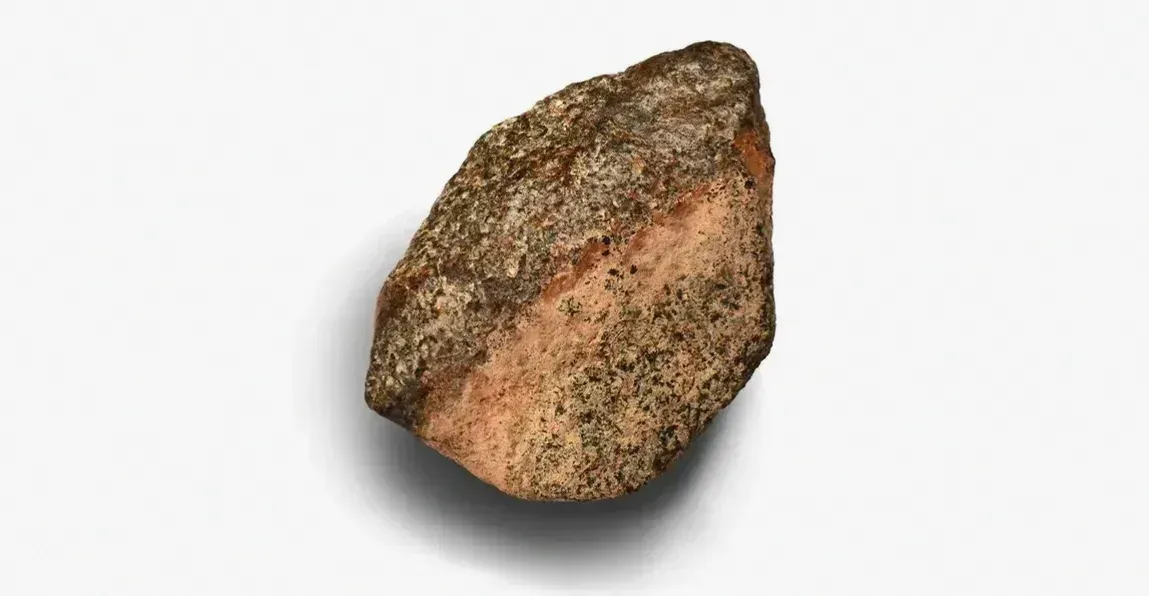
A striking rose-colored rock discovered in the vast stretches of the Sahara Desert has turned out to be far more than a curious geological find. After detailed analysis, NASA scientists have confirmed that the specimen, recovered from a salt plain in Mali back in 2022, is actually a fragment of Mars dating back approximately 4.1 billion years. Named Teghaza 001, the nearly two pound meteorite joins an elite group of only about 435 known Martian rocks on Earth, offering researchers an unprecedented look at the infancy of our celestial neighbor.
What makes this particular stone so significant is its extreme age and composition. Lead researcher Yang Liu from NASA’s Jet Propulsion Laboratory noted that while previous finds offered narrow windows into the past, Teghaza 001 acts almost like a Rosetta Stone for the Red Planet. By analyzing tiny zircon crystals using advanced age-dating techniques, scientists were able to trace the rock’s journey from cooling magma to its eventual alteration by liquid water on the Martian surface billions of years ago.
The discovery suggests that early Mars possessed a much more active and dynamic water cycle than previously assumed. According to scientist Lee Saper, the meteorite captures critical interactions between water and rock, potentially preserving imprints of an atmosphere that was slowly bleeding away into space. Because this sample comes from a region of Mars that scientists have never sampled before, it fills a massive gap in our understanding of how the planet’s crust originally formed.
While the findings already provide a rare snapshot of planetary evolution, experts believe they have only just begun to uncover its secrets. The team intends to continue studying the mineralogy and chemistry of the slice, hoping to learn more about how water shaped the ancient topography of Mars. For now, this small piece of African desert sand remains one of the most important keys to unlocking the deep history of another world.