
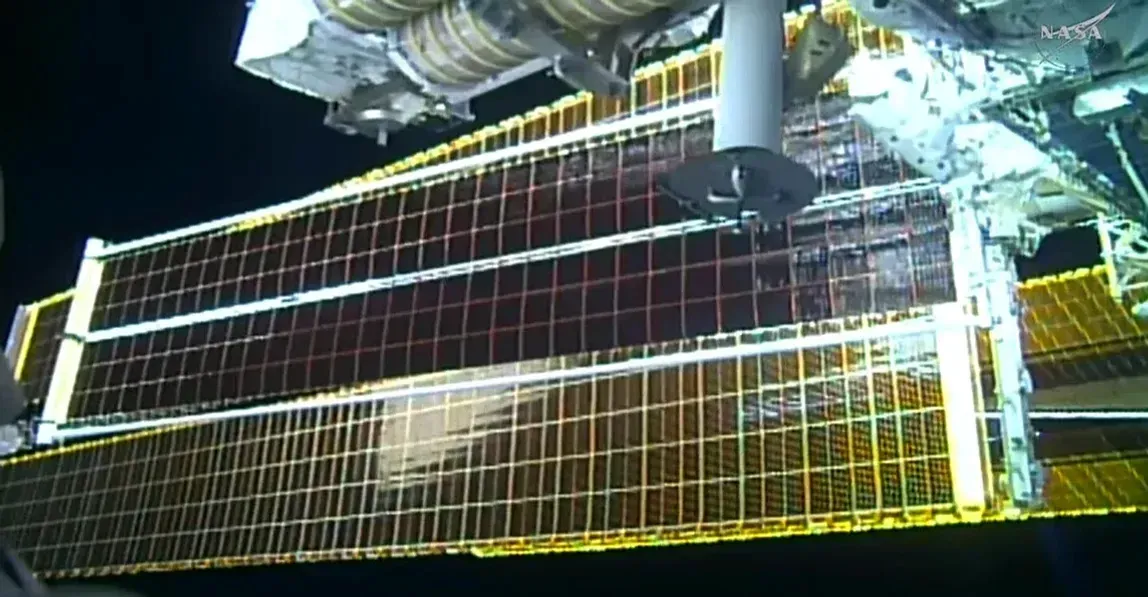
Two astronauts ventured into the void on Thursday to begin the closing chapter of a massive effort to revitalize the International Space Station’s electricity supply. NASA’s Anil Menon and Canadian Space Agency astronaut Joshua Kutryk spent over seven hours outside the orbiting laboratory, installing the seventh of eight high efficiency roll out solar arrays known as IROSAs. These modern blankets are designed to supplement the station’s original solar wings, which have gradually lost their effectiveness after spending two decades battling the harsh environment of space.
The operation required precise timing and careful maneuvering. To ensure safety, the duo waited until the station entered orbital darkness before wiring the new hardware into the power grid. As the station drifted back into the sunlight, Menon used a power tool to release a final restraint, allowing the sixty foot array to unfurl like a giant tape measure. Mission control reported immediate success, noting that this single addition provides an extra eight kilowatts of power to help keep critical life support and scientific research running smoothly.
This particular outing marked a significant milestone for both men, serving as Menon’s fourth trip outside and Kutryk’s very first. After completing the primary installation, they utilized their remaining time to prepare a final array for deployment next week. Despite handling equipment weighing roughly 750 pounds while floating in microgravity, the team worked efficiently, with Menon praising his rookie partner for delivering under high expectations throughout the grueling excursion.
Once the final blanket is locked into place next Thursday, it will cap off an upgrade project that began in 2021. By increasing total power capacity from about 152 kilowatts to an estimated 215 kilowatts, NASA ensures that the facility remains fully operational through its planned retirement in 2030. This surge in energy allows the station to continue hosting visiting spacecraft and conducting cutting edge experiments even as its legacy hardware continues to age.