
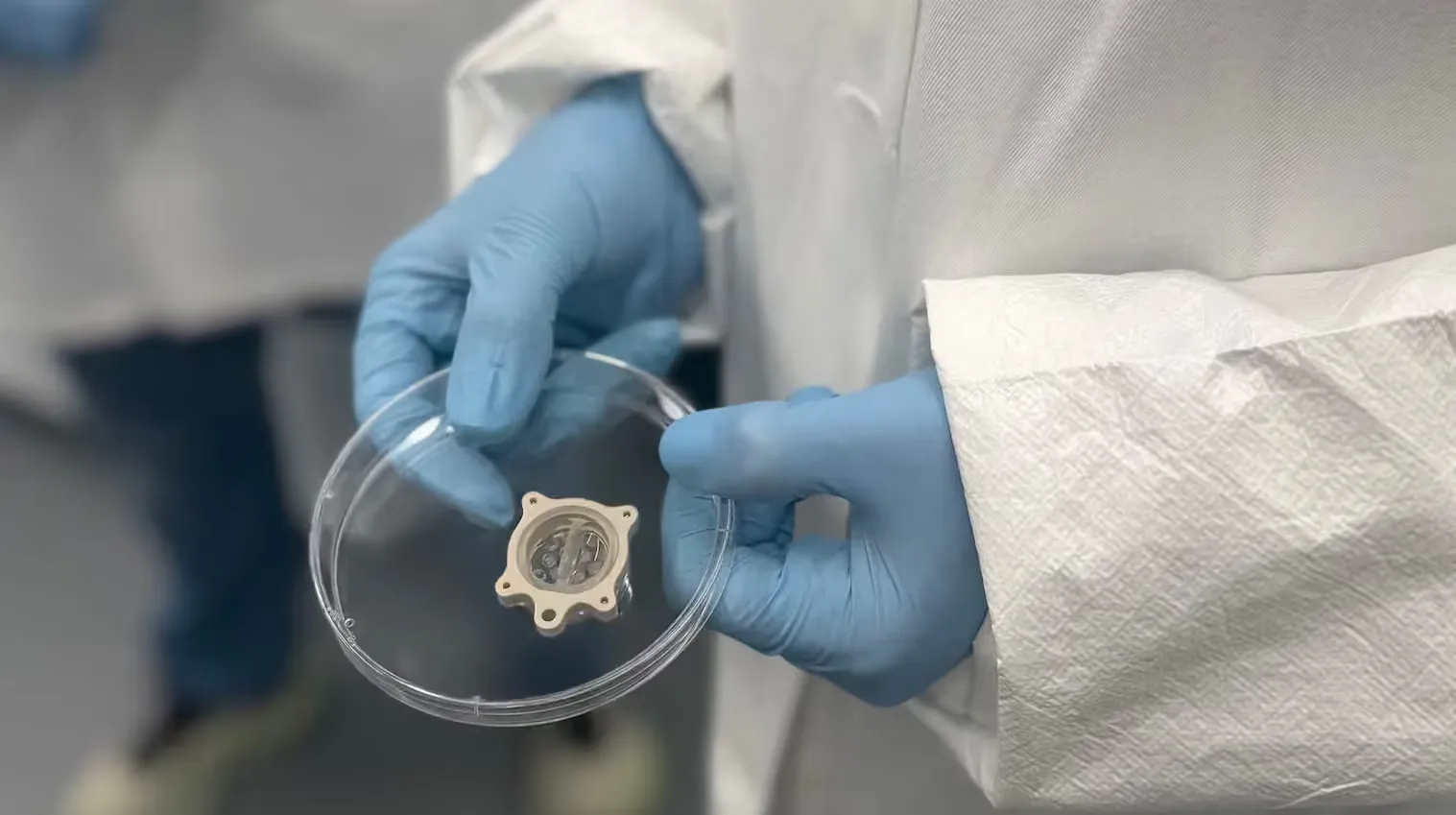
Scientists are looking toward the stars to solve some of the most stubborn mysteries of human health. In a groundbreaking collaboration between NASA, Mount Sinai, and Space Tango, miniature lab grown organs have been launched toward the International Space Station to study the devastating effects of deep space travel. These tiny biological models were sent aloft via a commercial resupply mission from Florida and are designed to withstand the harsh realities of microgravity and cosmic radiation, providing a window into how the human body breaks down when removed from Earth.
The stakes are particularly high because space acts as a catalyst for aging. Researchers note that just six months spent in orbit can be equivalent to nearly two decades of aging on the ground. By sending up sixteen miniature hearts and peppercorn sized brain models known as miBrains, experts hope to observe how these tissues react to zero gravity in real time. This process is facilitated by CubeLab, an automated system roughly the size of a shoebox that mimics the internal environment of a human body while floating thousands of miles above our heads.
While protecting future astronauts bound for the moon or Mars is a primary goal, the implications for people on Earth are equally significant. Because space so effectively accelerates cellular decay, it serves as a perfect laboratory for studying degenerative conditions like Alzheimer’s and Parkinson’s disease. The ability to simulate prolonged bed rest or sedentary lifestyles in microgravity allows doctors to develop treatments that would be nearly impossible to test under normal planetary conditions.
As NASA prepares for its ambitious plan to establish a permanent lunar base within the next decade, this shift toward orbital biology represents a major leap forward. Rather than relying on outdated data from early Apollo missions, modern science is now using synthetic biology to predict how humans will fare during multi year journeys across the solar system. Ultimately, these microscopic voyagers may provide the keys to longevity and healing for everyone regardless of whether they ever leave the atmosphere.