
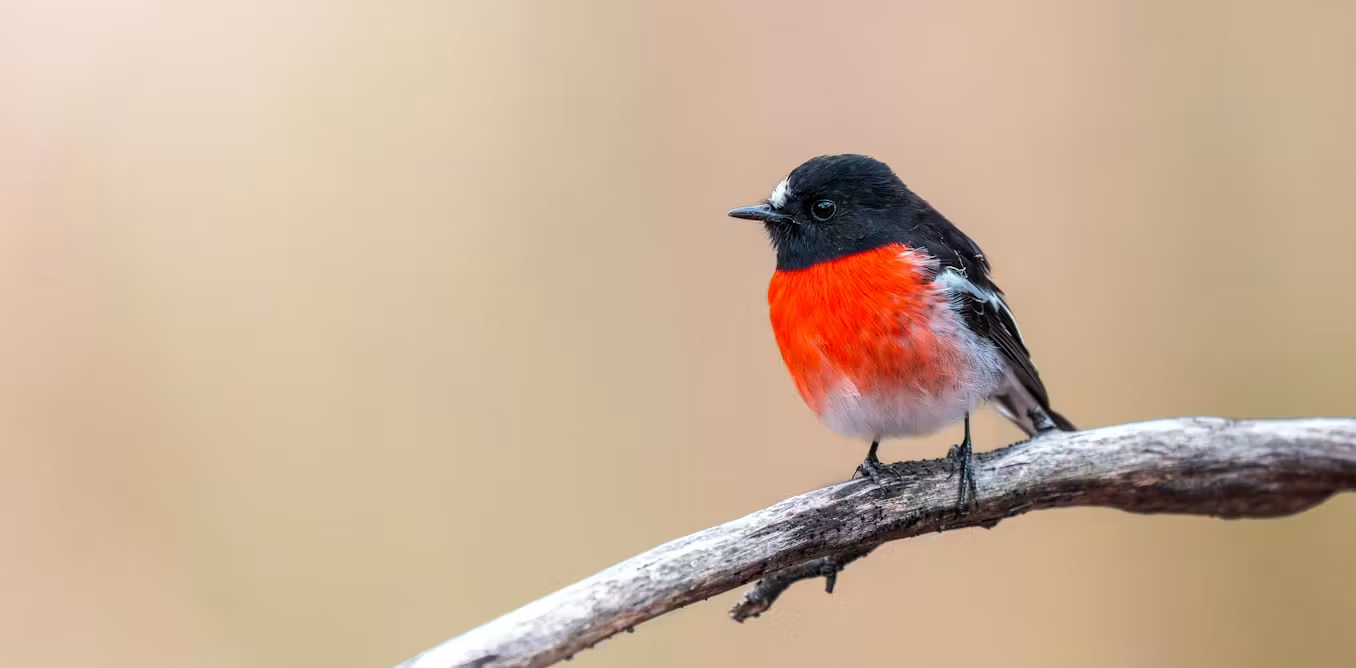
For one musician and zoomusicologist, a chance encounter with three pied butcherbirds on a remote Australian sheep station years ago sparked a lifelong obsession with the science of sound. What began as a moment of pure captivation evolved into a career studying how animals communicate and why certain melodies resonate so deeply within the human psyche. Today, that curiosity helps explain the broader story of songbirds, a group comprising nearly half of the world’s bird population, including beloved species like honeyeaters and lyrebirds.
While much of the historical research on birdsong centered on the Northern Hemisphere, genetic evidence has since flipped that narrative on its head. Data reveals that songbirds actually originated in Australia before radiating outward from Gondwana, the ancient supercontinent that once linked Australia, Antarctica, and South America. From there, these melodic creatures spread across the globe to create the diverse auditory landscapes we recognize today, from the colorful birds-of-paradise in New Guinea to the bell-like notes of thrushes in North American forests.
What sets these birds apart is a rare capability called vocal learning. Unlike basic instinctive calls used for foraging or nesting, true songs are learned from parents and peers. In this regard, songbirds share a biological trait with humans, parrots, and whales. While these songs certainly serve practical purposes like defending territory or attracting mates, many species produce compositions far more intricate than survival requires, creating art for art’s sake in the canopy of the forest.
Beyond the biology, there is a profound psychological benefit to tuning into these natural orchestras. Recent studies indicate that listening to birdsong for as little as six minutes can lower blood pressure, reduce anxiety and sharpen mental focus. It is a form of effortless therapy that exists everywhere from deep wildernesses to suburban power lines. Whether through specialized apps or simply stepping outside at dawn near a patch of dense vegetation, slowing down to listen offers a simple yet majestic way to reconnect with the natural world.