
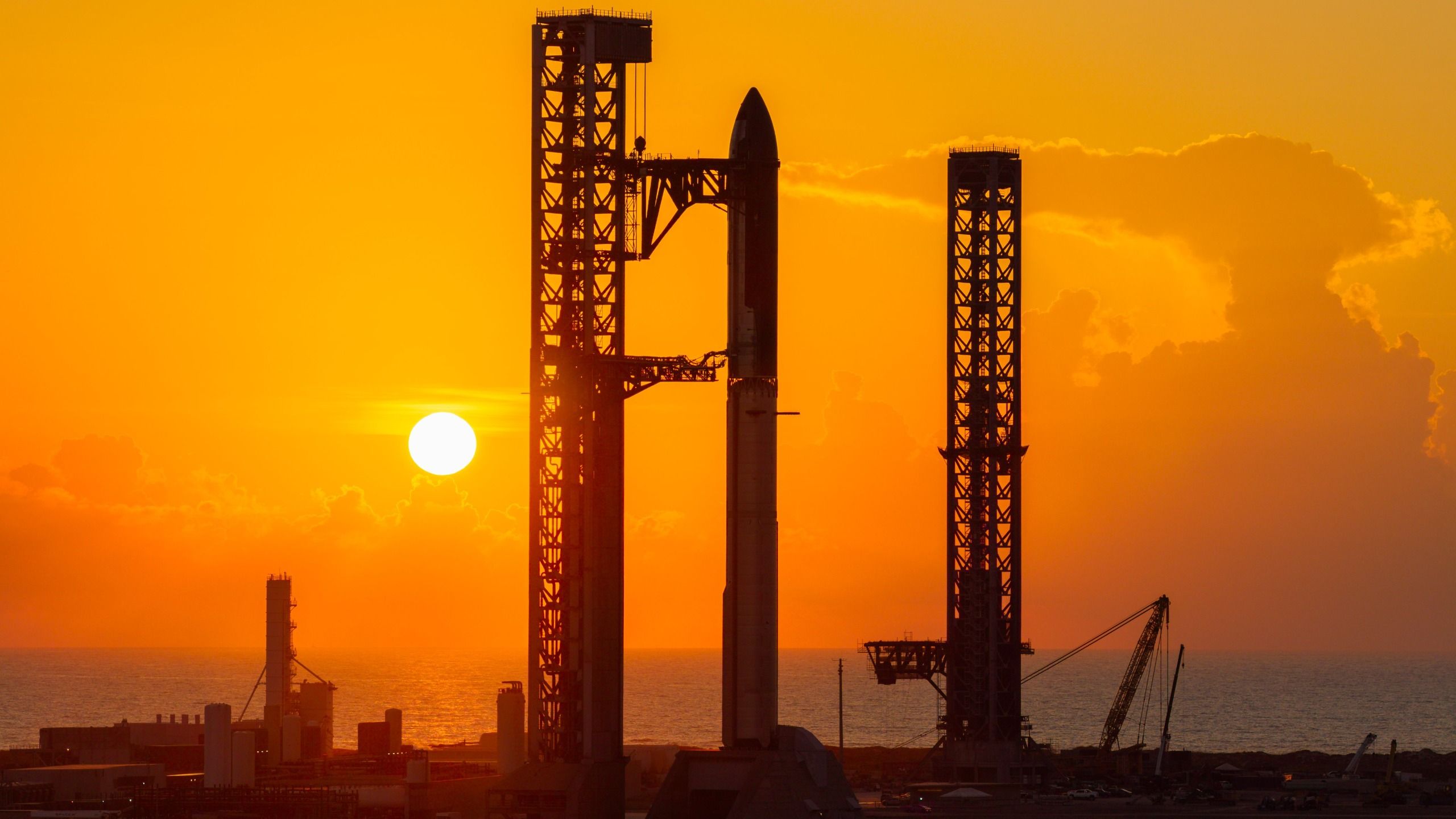
All eyes are turning toward South Texas this Monday morning as SpaceX prepares for one of the most significant milestones in modern aerospace history. The massive Starship megarocket is scheduled to attempt its first ever journey into orbit on September 28, launching from the company’s Starbase facility. The countdown begins within a seventy five minute window starting at 8:15 a.m. Eastern Time, and fans around the world can stream the event live via SpaceX’s official coverage, which kicks off half an hour before the engines ignite.
Standing at a staggering 407 feet when fully assembled, Starship is the largest and most powerful rocket ever constructed. While it has completed thirteen previous test flights since debuting in early 2023, those journeys were limited to suborbital trajectories. This fourteenth mission represents a major leap forward, aiming to push the ship into full Earth orbit for the first time. Once in space, the vessel will deploy twenty six next generation Starlink Version 3 satellites, marking the beginning of an ambitious expansion of Elon Musk’s global internet constellation.
The profile of this mission differs sharply from previous tests. Instead of a brief trip ending in the Indian Ocean, the Ship upper stage will circle the globe six times over roughly ten hours before splashing down off the coast of Chile. Meanwhile, the Super Heavy booster will follow its familiar pattern, returning to Earth for a splashdown in the Gulf of Mexico just seven minutes after liftoff. Although SpaceX eventually hopes to catch these boosters using giant mechanical arms at the launch pad, this specific flight focuses on achieving stable orbital velocity and successful payload deployment.
Beyond this immediate goal, Starship serves as the cornerstone for humanity’s future aspirations in deep space. By developing a fully and rapidly reusable system, SpaceX aims to drastically lower the cost of reaching space and enable permanent settlements on the moon and Mars. The stakes are particularly high given NASA’s reliance on the vehicle for its Artemis program, which intends to return humans to the lunar surface by 2028. Success on Monday would prove that Starship is capable of more than just short hops, bringing us one step closer to interplanetary travel.