
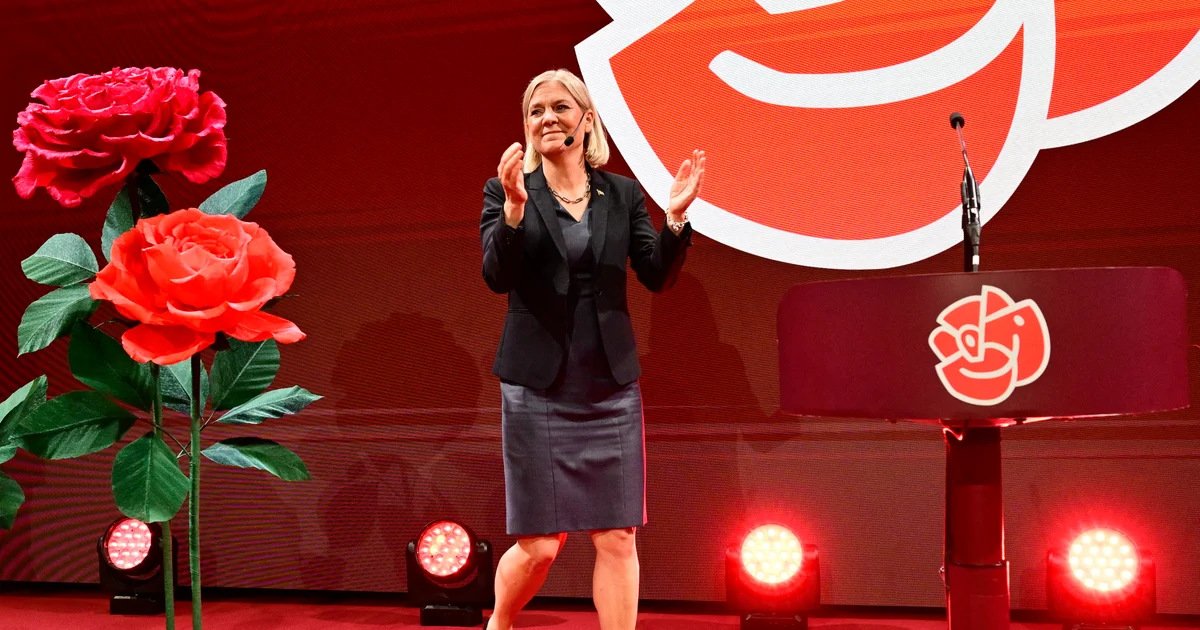
Sweden woke up to a cloud of political uncertainty on Monday following a nail-biting election that has left the country without a clear winner. With the vast majority of votes tallied, the left-wing opposition currently holds a razor-thin lead, though final results are not expected until Wednesday. This tension has set the stage for what experts predict will be a grueling period of negotiations, as both Magdalena Andersson of the Social Democrats and outgoing Prime Minister Ulf Kristersson scramble to assemble coalitions capable of securing a stable majority.
The most surprising turn of events was the unexpected dip in support for the far-right Sweden Democrats. For the first time in sixteen years, the anti-immigration party lost ground, sliding to seventeen point six percent and falling to third place. Political analysts suggest this retreat may be because their once radical stances on crime and migration have been absorbed into mainstream politics, leaving them without a unique edge to attract voters beyond their core base.
Despite their slight advantage, Andersson and her allies face an uphill battle to actually govern. The left-wing bloc remains deeply fractured by ideological disputes; specifically, certain parties have drawn hard red lines regarding who they are willing to work with inside a cabinet. Meanwhile, Prime Minister Kristersson is hoping to woo back centrist elements to maintain his grip on power, although critics argue that these parties remain fundamentally opposed to any alliance tied to the far right.
As parliament prepares for a potential vote on a new prime minister starting September twenty ninth, there is growing concern that the process could spiral into a stalemate. While Swedish political culture typically favors compromise over chaos, some analysts warn that if neither side is willing to abandon their demands, the country could be headed toward another snap election. For now, citizens like construction worker Mikko Duvaldt describe a climate of high polarization where finding common ground feels increasingly difficult.