
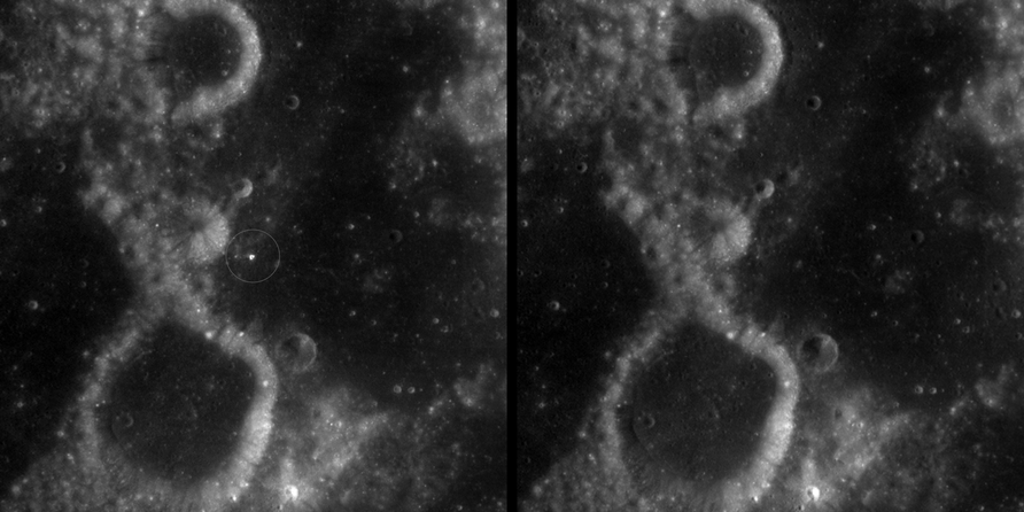
What began as a routine quality check of a global lunar map has turned into a historic astronomical find. Robert Wagner, a NASA scientist, was scanning through satellite data when he noticed something that stopped him in his tracks: an unusually bright patch encircled by a dark halo. After comparing current images with archives dating back to 2011, Wagner confirmed that he had discovered the largest newly formed impact crater ever documented in our solar system.
Now officially named the McGetchin Crater, the site was created when a comet or asteroid, estimated to be the size of a three to six story building, slammed into the eastern edge of the moon. Data suggests the collision occurred sometime between April 11 and May 22, 2024. The resulting impact carved out a massive void measuring 728 feet wide and 141 feet deep. According to NASA experts, an event of this scale occurs on the lunar surface only once every century or more.
The crater serves as a lasting tribute to late lunar scientist Tom McGetchin. In a poignant reflection written shortly before his passing, McGetchin spoke about the importance of doing one’s work quietly so that their contributions could help support future generations like stones in a larger structure. His legacy is now literally etched into the celestial landscape, providing scientists with a rare opportunity to study a fresh impact site in high resolution.
This breakthrough was made possible by the Lunar Reconnaissance Orbiter Camera system, which orbits approximately 60 miles above the moon’s surface. By utilizing high resolution black and white photography alongside multispectral imagery, researchers can track minute changes over time across millions of miles of terrain. This specific discovery highlights how consistent monitoring and meticulous mapping continue to unveil secrets about our nearest neighbor in space.