
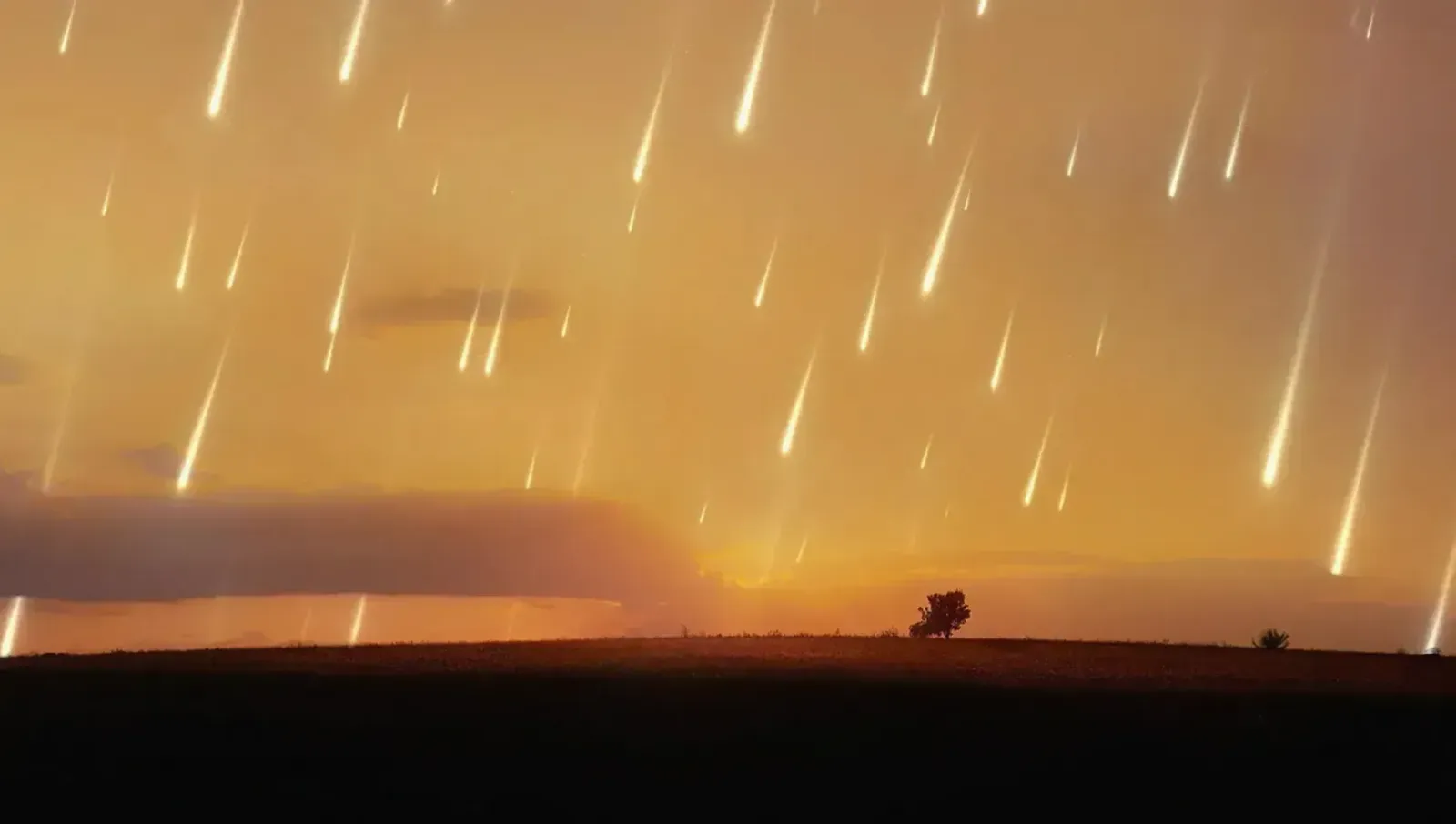
Stargazers have every reason to keep their eyes on the horizon this November, as a rare convergence of planetary alignments, meteor showers, and lunar events promises a spectacular show. The festivities kick off early in the month with the Southern and Northern Taurids. While these showers may not produce hundreds of streaks per hour, they are famous for delivering sudden, brilliant fireballs that can illuminate the entire night sky. For those hoping to catch them, experts suggest heading far away from city lights and giving your eyes half an hour to adjust to the dark.
The excitement continues mid-month with a stunning visual pairing in the pre-dawn hours. On November 15 and 16, Mars and Jupiter will drift remarkably close to one another in the southeastern sky. To the naked eye, the bright white glow of Jupiter will sit just beside the distinct reddish hue of Mars, appearing barely wider than two full moons side by side. Shortly after this alignment, on November 17 and 18, the Leonids will take center stage, offering viewers a chance to spot up to fifteen shooting stars per hour during the quiet moments before sunrise.
Beyond what we can see with our own eyes, NASA is celebrating a profound milestone in deep space exploration. On November 17, Voyager 1 becomes the first human-made object to reach a distance of one light-day from Earth. This staggering gap means that any radio signal sent from mission control now takes twenty four hours just to reach the probe, creating a forty eight hour wait for a round trip response. Though invisible to us, Voyager is currently trekking through the constellation Ophiuchus toward the furthest reaches of interstellar space.
Closing out the celestial calendar is a breathtaking finale on November 24 with the arrival of a full supermoon. This phenomenon happens when the moon hits its closest point to Earth during its orbital cycle, making it appear larger and more luminous than usual. Not only does this provide a glowing end to November’s displays, but it also marks the start of a rare sequence of three consecutive supermoons that will continue to brighten our evenings well into winter.