
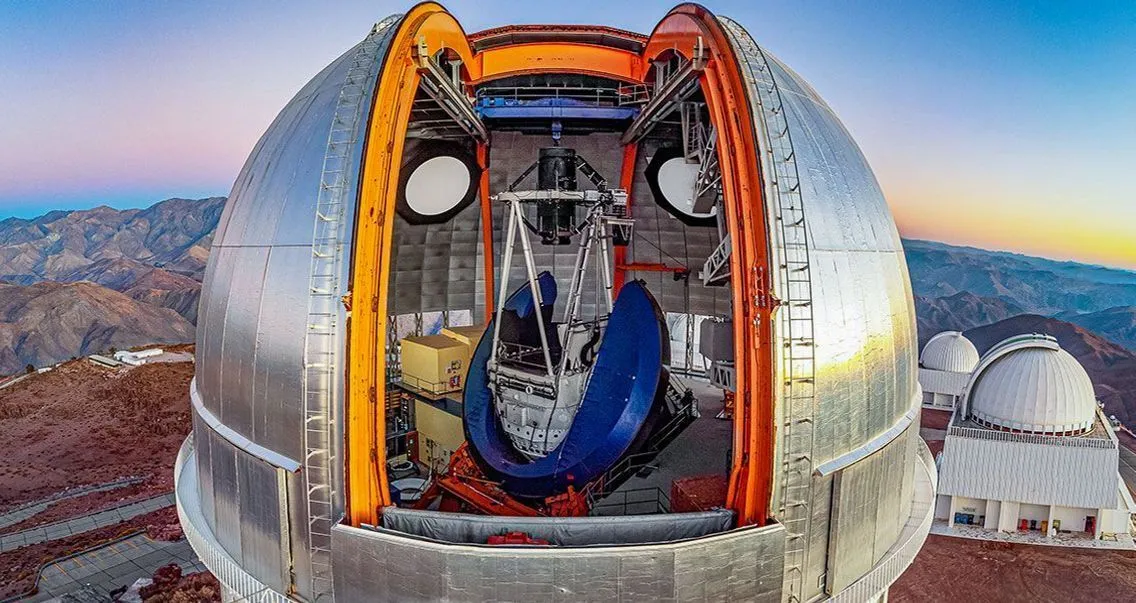
For twenty years, the Dark Energy Survey sought to map the invisible forces shaping our universe, using a massive 570 megapixel camera perched atop a telescope in the Chilean Andes. The project was born from a moment of scientific chaos in the late nineties when researchers discovered that the expansion of the cosmos wasn’t slowing down as expected, but was actually accelerating. This revelation pointed toward a mysterious, repulsive force dubbed dark energy, which scientists believe makes up roughly two thirds of everything in existence.
After analyzing a staggering dataset comprising hundreds of millions of galaxies and thousands of supernovas, the survey has finally reached its conclusion. However, rather than providing a neat confirmation of existing theories, the results have left cosmologists uneasy. When combined with data from other instruments, the findings suggest that the standard model of cosmology is incomplete. Researchers describe finding actual cracks in the theoretical framework that has governed their understanding of space for decades.
This newfound uncertainty marks a return to a period of productive confusion for the field. Experimental cosmology often works like detective work, where scientists piece together disparate clues such as light from the early universe and galactic rotation speeds to build a coherent narrative. For years, that narrative relied on a balance of visible matter and invisible dark matter held against the push of dark energy. Now, those pieces no longer fit perfectly into place.
While experts cannot yet identify exactly what is missing or why current models are failing, they admit that these discrepancies are both unsettling and exhilarating. The realization that something fundamental remains hidden suggests that another paradigm shift may be looming, potentially rewriting once again what we think we know about the composition and fate of the cosmos.