
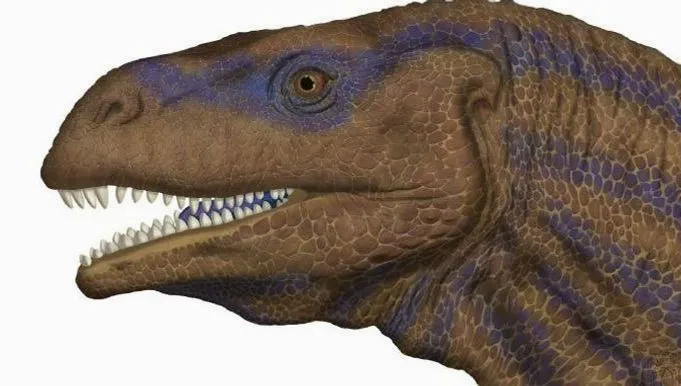
Paleontologists have uncovered a rare glimpse into the distant past in South Africa’s Eastern Cape, where the remains of a previously unknown dinosaur species have come to light. Named Nyana rooiwalensis, this early sauropodomorph lived roughly 220 million years ago during the Late Triassic epoch. While fossils from this era are often fragmented, researchers discovered a remarkably well-preserved, nearly complete skull and various limb bones on the outskirts of Qhemegha village, providing a treasure trove of data for scientists studying the ancestors of the legendary long-necked giants like Brontosaurus.
The significance of the find lies in its rarity and state of preservation. Most Triassic dinosaur skulls from the southern continents are sparse or incomplete, but the Nyana rooiwalensis specimen includes an intact braincase and even the delicate bone structures of the throat. To peer inside without damaging the fossil, Dr. Atashni Moopen and her team utilized high-powered X-ray beams at the European Synchrotron Radiation Facility. Their analysis revealed that despite being a juvenile—likely only in its third year of life—the creature was already significantly larger than other young dinosaurs of its kind from that period.
By examining growth rings within the leg bones, similar to how biologists study tree rings, the research team determined that this dinosaur was growing rapidly when it died. This suggests that adults could have eventually reached weights of several tons. Interestingly, while its descendants became some of the heaviest land animals to ever walk the earth, evidence suggests Nyana rooiwalensis likely navigated its world on two legs.
Beyond individual biology, the discovery helps map out how ancient life migrated across Pangea. Depending on further classification, this new species could establish a vital prehistoric link between Southern Africa and Western North America, suggesting that certain dinosaur lineages were far more widespread than previously thought before they radiated across the globe in the Early Jurassic. The full details of this breakthrough were recently published in Royal Society Open Science.