
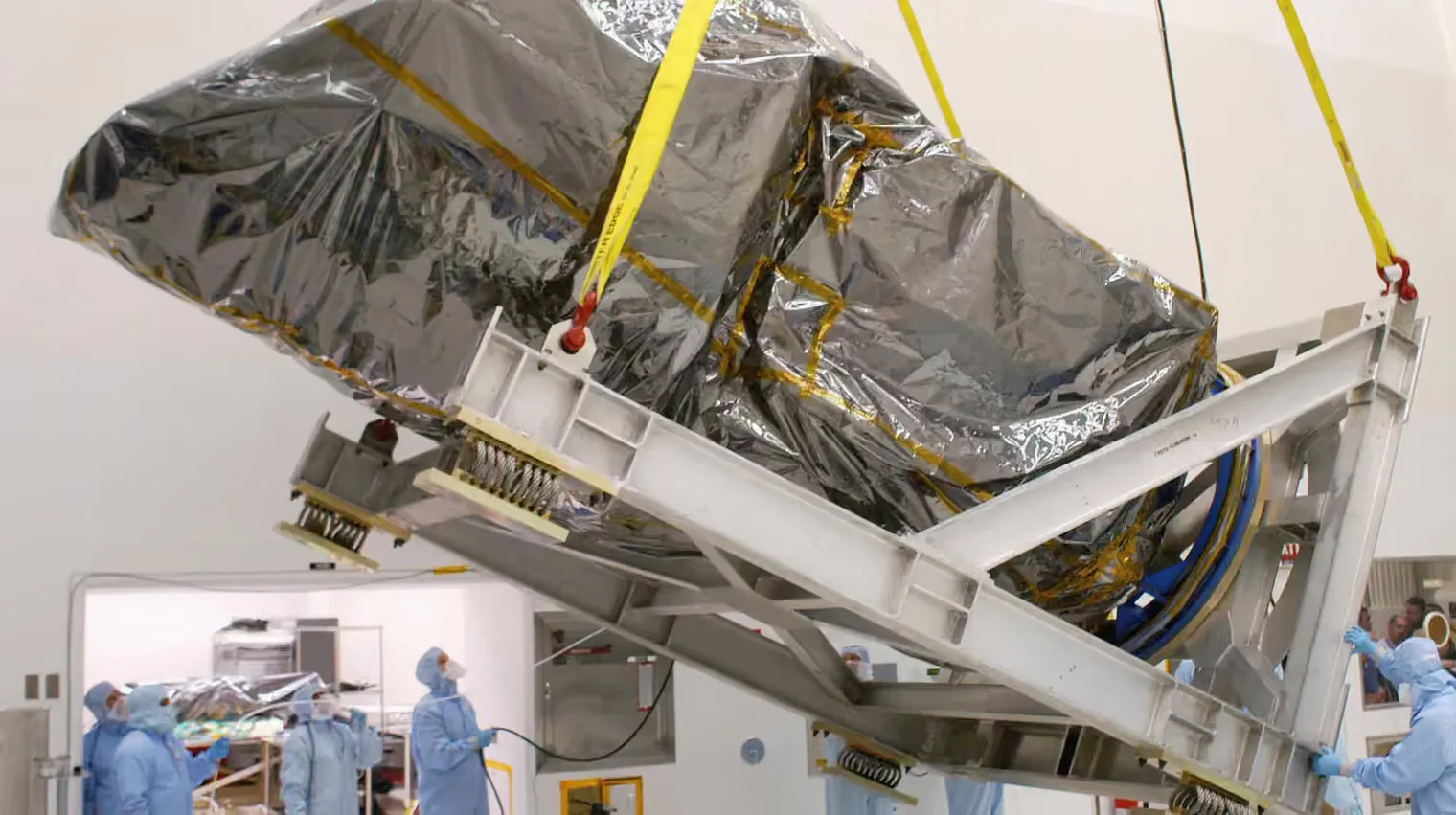
After twenty two years of scanning the heavens for the universe’s most violent explosions, NASA’s Swift Observatory is preparing for a fiery homecoming. The US Space Force expects the one and a half ton telescope to plunge back through the atmosphere around Friday, marking a catastrophic end to a legendary mission. While much of the spacecraft will vaporize upon reentry, officials warn that dense components like mirrors and tungsten fragments may survive the heat, likely splashing down in the ocean though large portions of Africa, Asia, and the Americas fall within the potential debris zone.
The observatory’s descent was accelerated by intense solar activity that dragged it lower than anticipated, prompting a desperate last ditch rescue attempt. Last year, NASA partnered with Katalyst Space to deploy a robotic arm designed to stabilize the craft. However, the mission ended in failure when the robot struggled to close the distance and eventually burned up in September. Despite these setbacks, Swift continued its work until late October, capturing data right up until its systems became too unstable to operate.
For astronomers, the loss is bittersweet. Since its launch in 2004, Swift acted as a galactic scout, utilizing its unique ability to pivot quickly toward gamma ray bursts and supernovas. It served as an essential first responder for larger instruments like Hubble and James Webb, alerting them to high energy events across the cosmos. In total, it cataloged thousands of bursting stars and black holes that shredded nearby suns.
As scientists now scramble to find a way to fill the void left by its absence, they are reflecting on the legacy of a machine that spent two decades redefining our understanding of deep space. While its physical form will soon vanish in a streak of light across the sky, researchers say the wealth of data gathered ensures that Swift’s contribution to astronomy will endure long after its remnants hit the water.