
NASA is embarking on what officials describe as perhaps the most complex launch sequence in history, pushing for an ambitious set of tests next year to ensure humans return to the moon by 2028. At the center of this frantic pace is a new trial mission known as Artemis III, where two competing private companies, SpaceX and Blue Origin, will attempt to dock their respective lunar landers with NASA’s Orion spacecraft in low-Earth orbit. This high-stakes dress rehearsal is designed to vet which vehicle is truly ready for the actual journey to the lunar surface during the subsequent Artemis IV mission.
The pressure is mounting for both corporate partners as NASA Administrator Jared Isaacman makes it clear that delays will not be tolerated. Isaacman warned that if schedules slip, agency personnel won’t just be observing from a distance or writing reports; they intend to step directly onto the factory floors to help solve technical hurdles. The urgency comes at a critical time for both vendors. While SpaceX continues to refine its massive Starship vehicle through iterative testing, Blue Origin is still recovering from a May ground test explosion that destroyed part of its Florida facility and delayed progress on its Blue Moon lander.
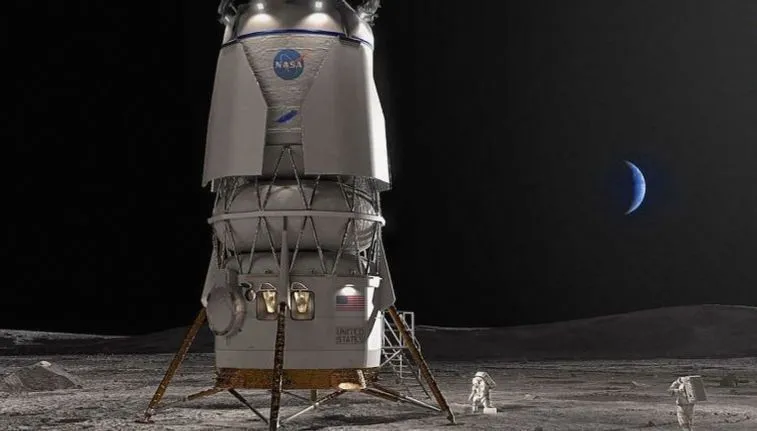
Technologically, the two contenders could not be more different. SpaceX is betting on Starship, a towering, futuristic vessel that acts as both rocket and lander, though it must still prove it can successfully transfer cryogenic fuel between ships in orbit—a feat never before achieved. Conversely, Blue Origin’s approach mirrors the classic aesthetics of the Apollo era with a smaller, dedicated landing module launched via its New Glenn rocket. Both systems face steep climbs, having never carried crews or performed docking maneuvers with astronauts on board.
To keep these timelines viable, NASA is stripping back complexity across the entire Artemis program. From simplifying moonwalking spacesuits provided by Axiom to streamlining the design of its own heavy-lift rockets, the agency is aggressively removing bureaucratic and technical bottlenecks. By focusing on lean hardware and rapid prototyping, NASA hopes to transform this chaotic dash into a successful bridge toward putting boots back on lunar soil for the first time since 1972.