
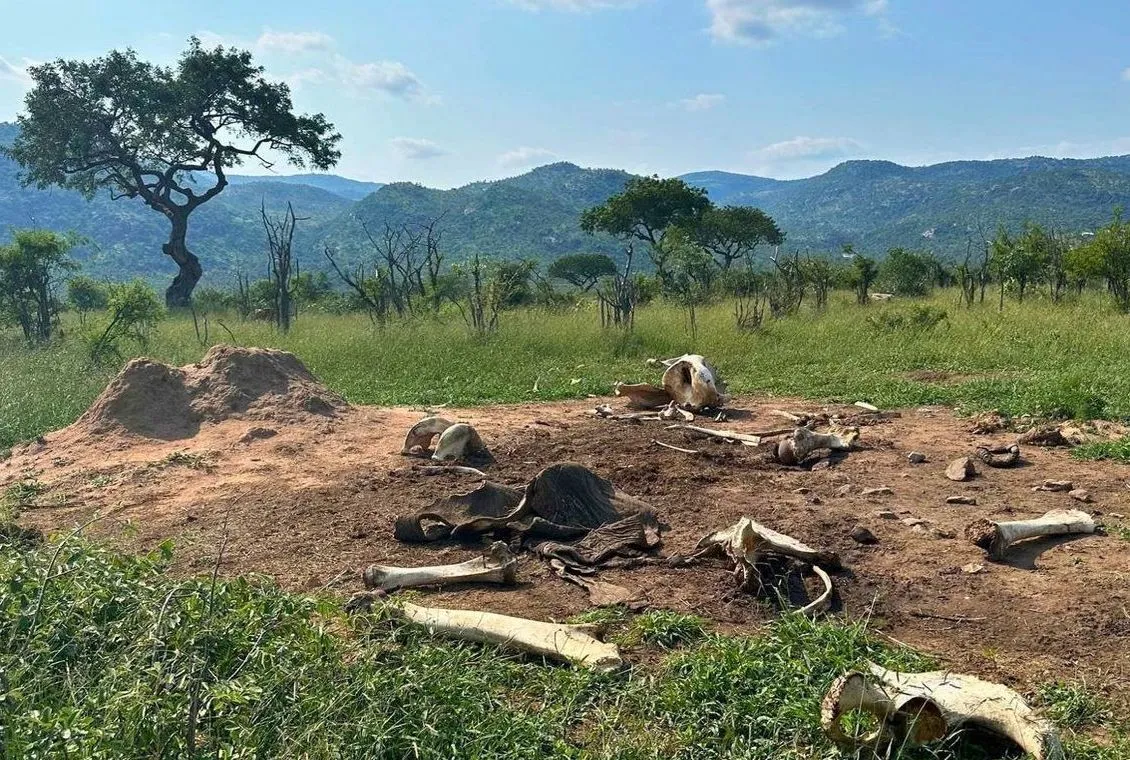
When a lone elephant named Alexander died beside a road in South Africa’s Kruger National Park back in 2009, it seemed like a tragic end to a single life. However, for researcher Dave Thompson, who passed the carcass frequently during his travels, the site became a window into a hidden biological process. He began to wonder if the death of such a massive creature left behind more than just memories, drawing parallels to whales whose carcasses sustain deep sea ecosystems for decades after they sink.
The subsequent investigation revealed that an elephant’s influence on the environment does not stop at death; instead, it shifts into a potent chemical transformation. In the immediate aftermath, the surge of nutrients leaching into the earth was overwhelming. Lead author Courtney Reed noted that nitrogen concentrations near fresh carcasses could spike to 3,000 times their normal levels, describing the sheer scale of the chemical shift as insane. At first, this intensity actually stifled plant growth and wiped out most soil bacteria, leaving only a few hardy, fast growing species to dominate the landscape.
As time passed and the soil chemistry stabilized, the area underwent a remarkable rebirth. The once sterile patch of land transformed into a lush oasis of highly nutritious grasses that acted like magnets for local herbivores. These animals returned repeatedly to feast on the nutrient dense greenery, further enriching the soil with their own manure in a continuous cycle of fertility. Researchers discovered that these ecological footprints lingered for at least eight years after the animal had vanished.
This discovery highlights a profound aspect of nature where current landscapes are often sculpted by ghosts from the past. While elephants are well known as ecosystem engineers during their lives—knocking over trees and dispersing seeds—their deaths provide a secondary, invisible layer of engineering. It serves as a powerful reminder that even after an animal disappears from view, its legacy continues to feed and shape the wild world around it long after it is gone.