
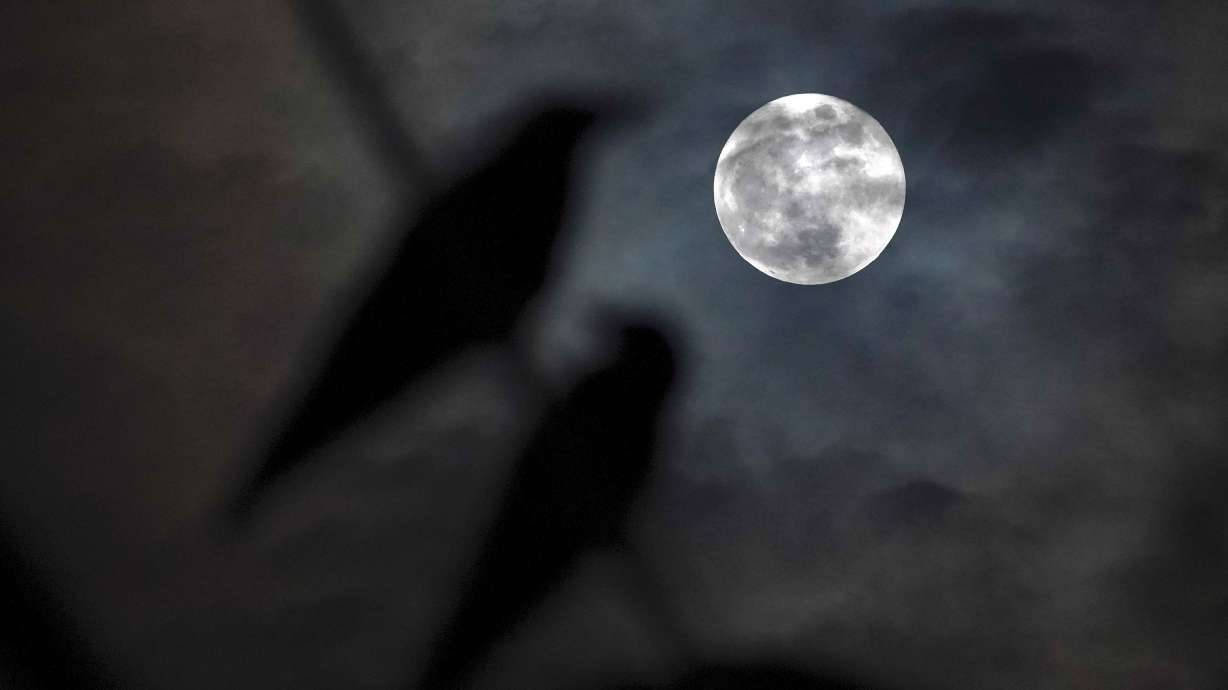
Stargazers should keep their eyes on the horizon this weekend for a rare celestial pairing that promises a stunning visual treat. The first full moon of the autumn season is set to reach peak illumination on Saturday morning, providing a brilliant backdrop for those looking to catch a glimpse of Saturn. While the moon hits its brightest point mid-morning, experts suggest that the most breathtaking views will occur just after sunset on Saturday evening, when the silvery orb shares the stage with the golden glow of the ringed planet.
This particular alignment comes at a perfect time, as Saturn is approaching opposition on October 4. When a planet reaches opposition, it sits directly opposite the sun from Earth’s perspective, bringing it closer to us in its orbit and making it appear significantly larger and brighter than usual. For those with high-powered binoculars or telescopes, Neptune may also appear nearby, though the distant gas giant remains elusive compared to its more prominent neighbors. If cloudy weather spoils the main event on Saturday, observers can still enjoy a nearly full moon on Friday and Sunday evenings.
Beyond the science of orbital mechanics, there is a rich history tied to this specific lunar phase. Often referred to as the Corn Moon or Yellow Leaf Moon by various Indigenous groups including the Abenaki and Assiniboine peoples, this event is most commonly known today as the Harvest Moon. Its name stems from its proximity to the autumnal equinox; historically, farmers relied on the extra light provided by these bright nights to extend their working hours into the evening during critical harvest periods.
Many people associate the Harvest Moon with a deep orange or amber hue, which enhances its seasonal charm. However, astronomers note that this coloring isn’t unique to September but happens whenever a full moon sits low on the horizon. As viewers look through a thicker layer of Earth’s atmosphere, shorter wavelengths of light are scattered away, leaving behind those warm red and gold tones. With several one-off events still ahead—including upcoming supermoons in November and December—this weekend serves as a glowing invitation for nature lovers to rediscover the magic of the night sky.