
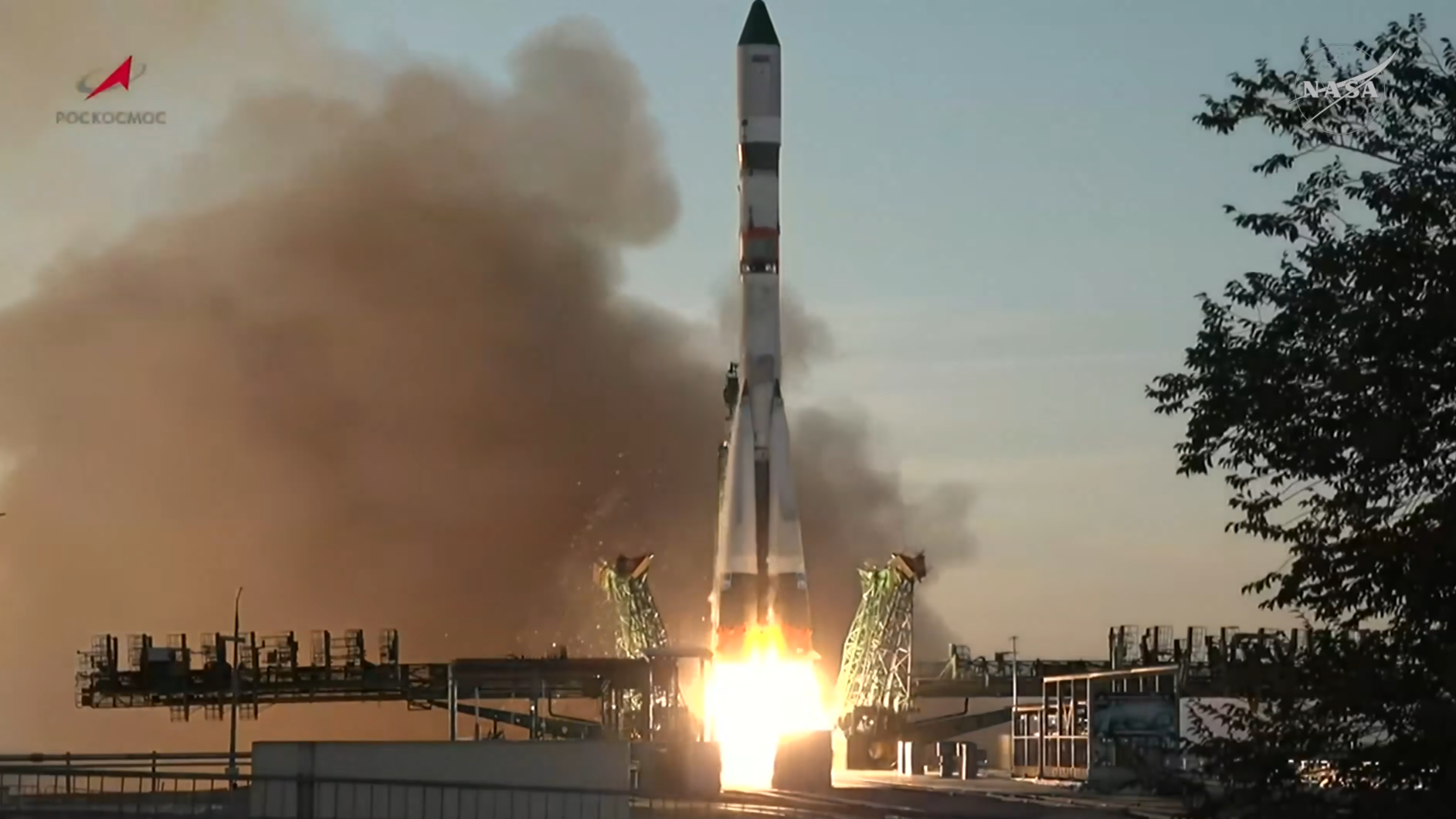
Russia successfully sent another shipment of vital supplies to the International Space Station on Monday morning, launching the robotic Progress 96 spacecraft from the Baikonur Cosmodrome in Kazakhstan. Lifting off atop a Soyuz rocket at 9:33 a.m. EDT, the mission was described as flawless by observers. NASA’s Rob Navias noted during the live broadcast that the ascent was nominal, praising the excellent climb to orbit provided by the booster before the spacecraft deployed its solar arrays.
The unmanned freighter is carrying roughly three tons of essential cargo, including fresh food, fuel, and various hardware needed to sustain the crew currently living in orbit. If everything proceeds according to schedule, the spacecraft will spend three days maneuvering through space before it reaches its destination and docks with the orbiting laboratory. Once attached, Progress 96 will serve as a storage hub for approximately five months before being filled with waste and directed back toward Earth to burn up in the atmosphere over the Pacific Ocean.
This arrival follows closely on the heels of a similar departure, as Progress 94 left its berth just last week to clear a spot for this new delivery. The Russian vessel is part of an international logistics network that keeps the station running alongside ships from SpaceX, Northrop Grumman, and Japan. While most of these vehicles are designed to incinerate upon reentry, only SpaceX’s Dragon capsules return safely to ground level with scientific samples.
Currently, seven people call the station home, representing a diverse coalition from NASA, Roscosmos, and the European Space Agency. Among them is Sophie Adenot, who recently made history as the first French woman to conduct a spacewalk. These astronauts and cosmonauts rely heavily on these periodic supply runs to maintain their research projects and daily survival while floating hundreds of miles above the planet.