
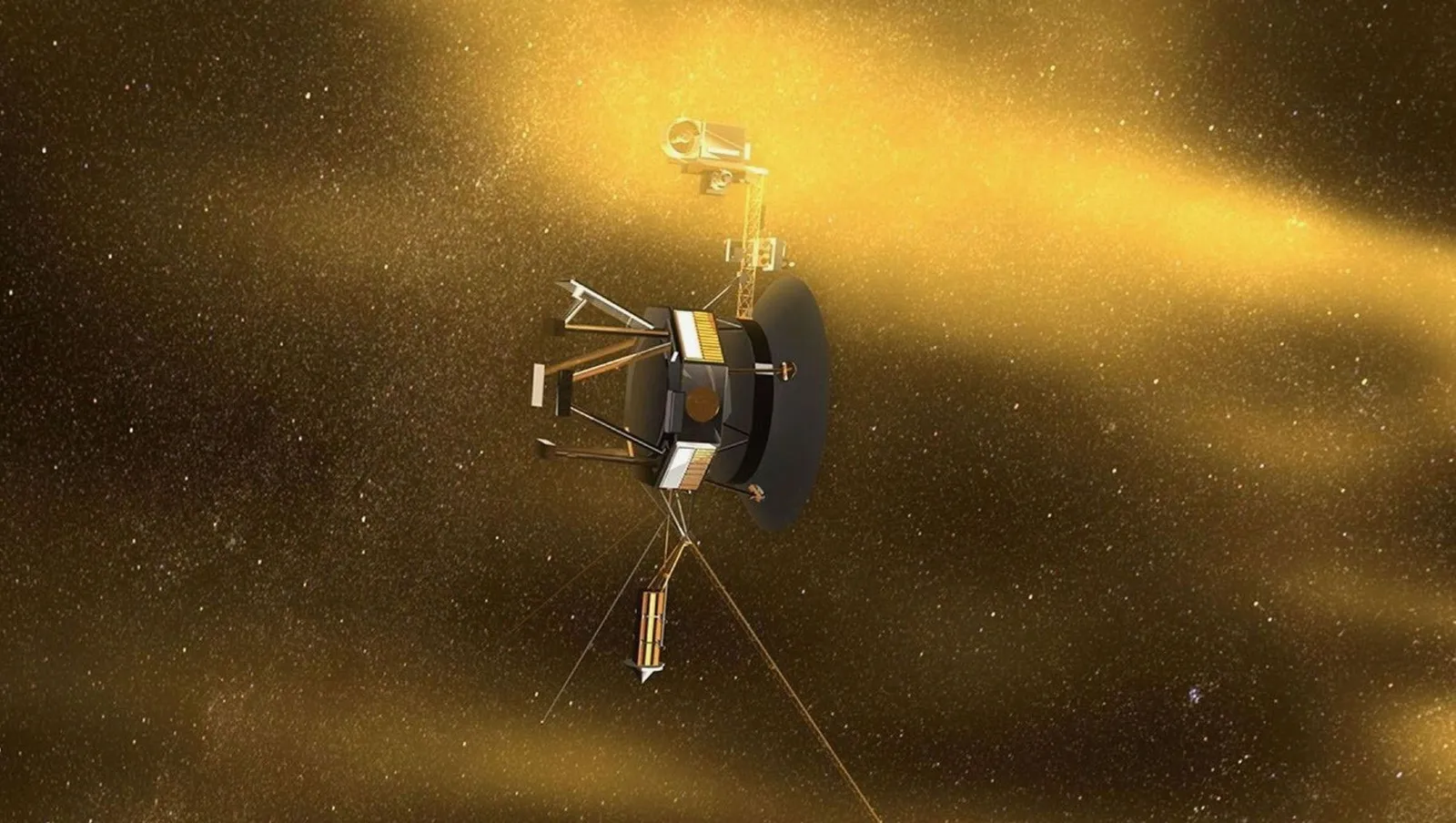
NASA’s Voyager 1 has officially entered a new era of isolation, reaching a distance where it now takes a full twenty four hours for a signal to travel from Earth to the spacecraft. This historic milestone marks the first time a human made object has passed the one light day threshold, creating a staggering communication lag that underscores just how far the probe has ventured into the cosmic void. While its twin, Voyager 2, follows a different trajectory and isn’t expected to hit this mark until 2035, Voyager 1 continues to act as humanity’s furthest scout in the great unknown.
Despite the immense distance, the scientific mission remains urgent. Researchers at the Jet Propulsion Laboratory are currently focused on mapping the transition between our sun’s sphere of influence and truly pristine interstellar space. By measuring plasma density and magnetic field strengths, scientists hope to discover exactly where the sun’s reach ends. These measurements provide vital clues about the nature of our galaxy, though every discovery comes with a risk as the aging craft battles an increasingly hostile environment.
Survival is now a game of careful calculations and dwindling resources. Both probes lose roughly four watts of power annually from their nuclear sources, forcing engineers to make difficult decisions about which instruments to keep running and which to shut down forever. Earlier this year, teams performed a massive redistribution of power to stretch their operational lives toward their upcoming fiftieth anniversaries. However, maintaining heat in the freezing depths of space remains a precarious balancing act for technicians back on Earth.
Managing these legendary machines has become a multi generational effort at NASA. Veteran engineers are now mentoring junior staff who must master ancient command systems and coordinate with deep space antennas across the globe to maintain contact. As Voyager 1 drifts further away, facing unpredictable glitches and thinning energy reserves, the team remains dedicated to squeezing every possible bit of data from the probe before it eventually falls silent in the darkness.