
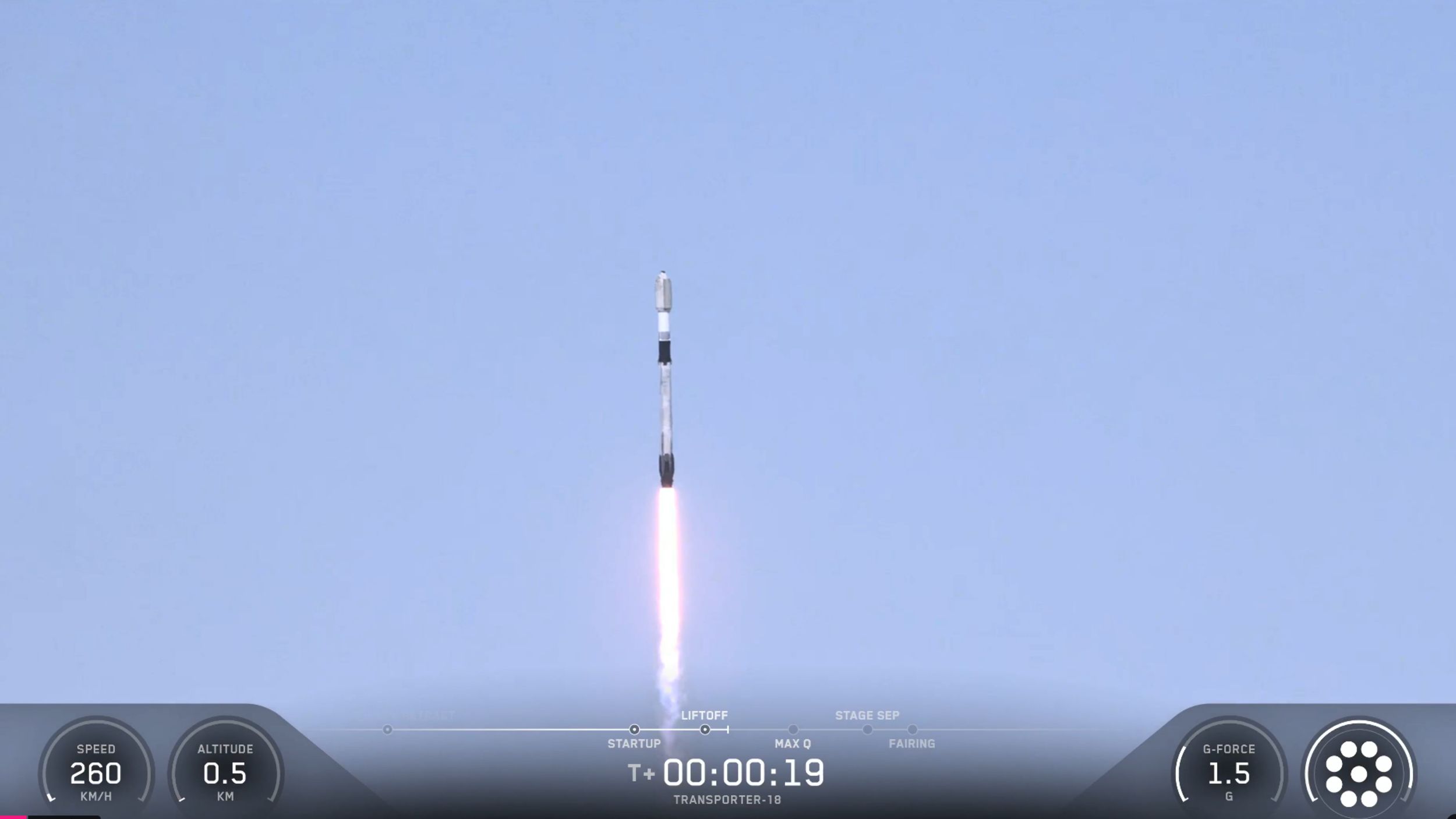
SpaceX continued its relentless pace of orbital deliveries Tuesday, launching a massive haul of 130 payloads into space from California’s Vandenberg Space Force Base. The mission, dubbed Transporter-18, saw a Falcon 9 rocket pierce through the typical coastal fog at 2:32 p.m. EDT to begin its ascent. Everything proceeded smoothly, with the rocket’s first stage returning home for a precise landing just seven and a half minutes after liftoff, marking the twenty fifth time this specific booster has flown.
While the sheer volume of cargo was impressive, the star of the show was a pathfinder satellite for Google’s Project Suncatcher. As Google looks toward building an artificial intelligence constellation in low Earth orbit, this prototype will serve as a critical test bed for their specialized tensor processing units. Engineers are particularly interested in seeing how these AI chips handle the harsh radiation of space and whether they can effectively dissipate heat without the luxury of traditional atmospheric cooling.
Google wasn’t the only entity eyeing the intersection of AI and orbit. Cowboy Space also hitched a ride with its Reason-1 satellite, which aims to demonstrate power beaming by transferring energy via lasers from space to ground receivers. Meanwhile, Starfish Space successfully deployed its first Otter servicing satellite, moving closer to making affordable on-orbit maintenance a reality for commercial customers. These high-tech additions were accompanied by a diverse mix of cubesats and orbital transfer vehicles that filled out the manifest.
The Transporter-18 mission served as the middle act in an extraordinary tripleheader for SpaceX across two coasts. Earlier in the day, the company launched NASA’s Crew-13 astronaut mission from Florida, while preparations remained underway for a nighttime launch involving a Falcon Heavy rocket for the National Reconnaissance Office. While this flight fell just short of SpaceX’s all-time payload record of 143 satellites, it further cemented the company’s role as the primary taxi service for the modern space economy.